

When people talk about a projection screen, they often focus on the projector. In reality, the screen material has just as much impact on image clarity, brightness, and viewing comfort. For manufacturers, distributors, and buyers, understanding projection screen fabric rolls and the materials behind them helps ensure the right product for every application—from home theater to outdoor cinema.
This guide explains projector screen materials, how they work, and how to choose the right fabric for your project.
Projection screen fabric is the engineered surface that reflects or transmits light from a projector to produce a visible image. Most screens are made from coated textiles or vinyl-based materials supplied in large roll form to screen manufacturers.
These fabric rolls are later converted into:
The fabric determines brightness, contrast, viewing angle, and durability.
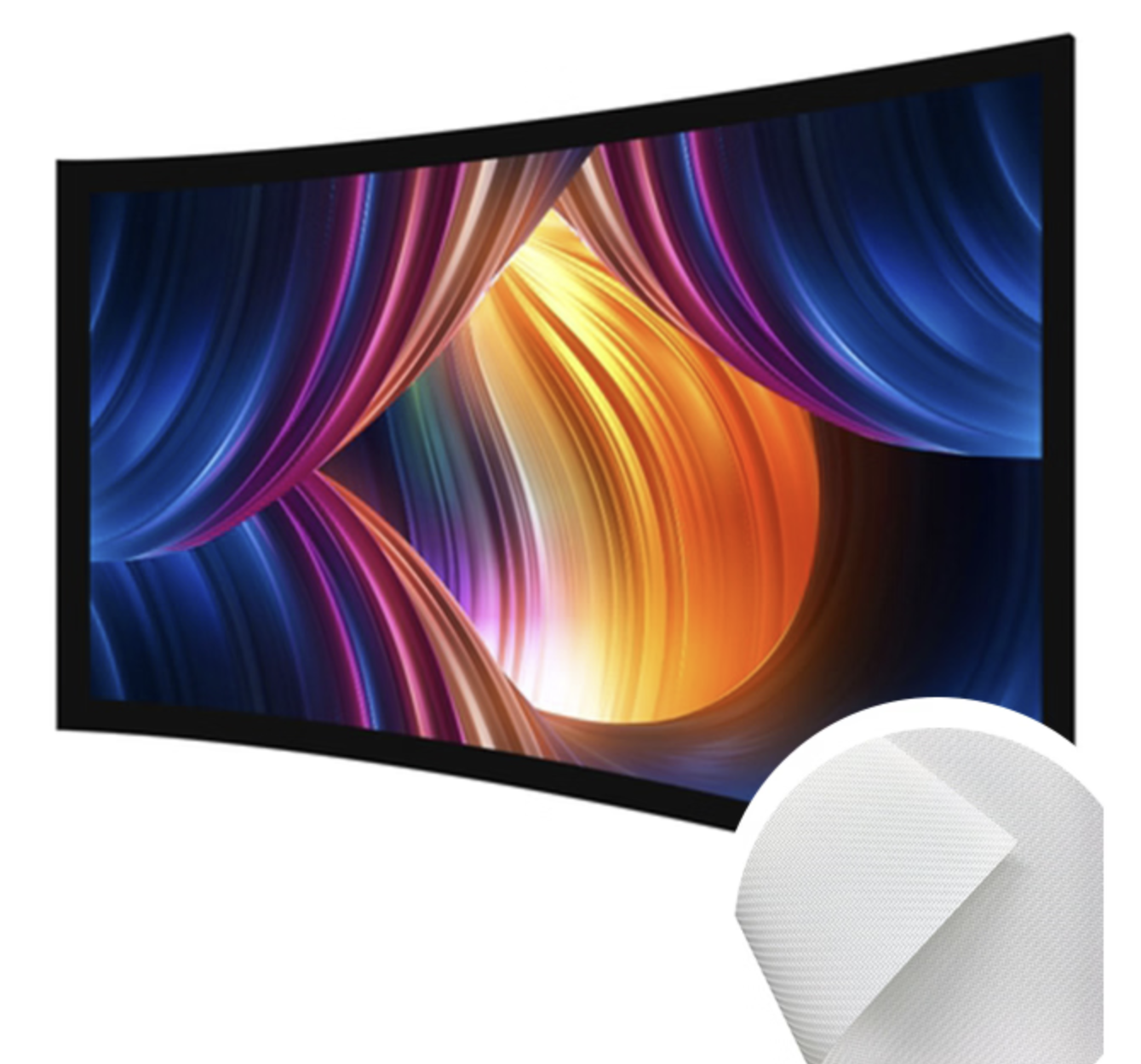
A projector sends light toward the screen. The material surface controls how that light is reflected or transmitted.
Key optical properties:
Gain describes how much light the screen reflects toward viewers.
The maximum angle where the image remains bright and accurate.
Smooth surfaces produce sharper images, while textured coatings improve light diffusion.
The most common projection screen material.
Features
Best for
Grey fabric improves contrast in rooms with ambient light.
Benefits
Best for
Black or dark ALR materials reject ambient light.
Benefits
Best for
Vinyl is the dominant material in modern projector screen manufacturing.
Vinyl projection screen fabric rolls are widely supplied to OEM and ODM screen manufacturers.
| Material | Advantages | Typical Use |
|---|---|---|
| Vinyl | Smooth, affordable, durable | Most projection screens |
| Woven Fabric | Acoustically transparent | Home theater sound systems |
| Fiberglass-backed | Dimensional stability | Large electric screens |
Fiberglass backing prevents wrinkles and edge curling, especially on large roll-up screens.
Reflects light back toward viewers.
Used for:
Allows light to pass through the screen from behind.
Used for:
Rear projection fabric provides:
Outdoor projection has different requirements than indoor viewing.
Many outdoor screens use thick vinyl projection fabric with reinforced backing to withstand temperature changes and humidity.
Common applications:
Screen factories typically purchase projection screen material rolls instead of finished screens.
Why rolls are preferred:
Typical roll specifications:
Although formulations differ by supplier, most projector screen materials follow a similar process.
Polyester or fiberglass fabric is prepared as the base layer.
Multiple coating layers are applied to control:
The coated fabric is heated and cured for stability.
Micro-texture patterns may be added to improve diffusion.
Fabric is tested and packed into shipping rolls.
Consider the following factors:
Large screens benefit from fiberglass backing.
Projection screen materials are used across many industries:
Vinyl projection screen fabric is the most widely used because it balances cost, durability, and image quality.
White works best in dark rooms. Grey performs better when some ambient light is present.
Yes. Most vinyl screen materials can be wiped gently with mild soap and water.
Rear projection material allows the projector to sit behind the screen, producing an image through the fabric.
Most materials range from 0.3 mm to 0.6 mm depending on backing and coating layers.
High-quality materials often last 5–10 years under normal indoor use.
Yes. Outdoor fabrics include UV and weather resistance for durability.
Choosing the right projection screen fabric affects brightness, contrast, durability, and user experience. From vinyl projector screen materials to rear projection fabric and outdoor screen rolls, each option serves different environments and applications.
For screen manufacturers and buyers, understanding materials and production methods makes product selection easier and helps deliver consistent viewing performance.